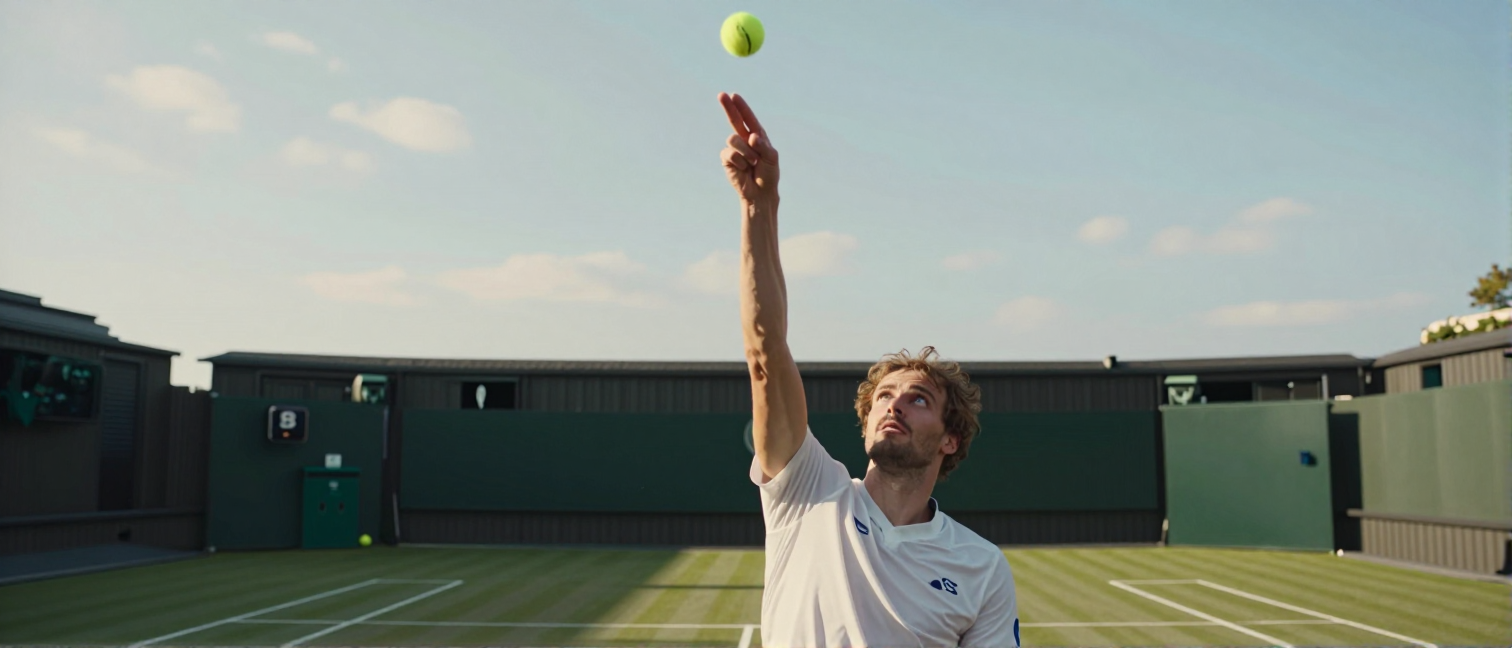
Andrey Rublev opened his Wimbledon 2026 campaign against a formidable opponent, underscoring the unforgiving nature of Grand Slam first rounds. The Russian entered the All England Club with a recent surge in form, yet the draw paired him with a player capable of exploiting any lapse in his powerful baseline game.
What made Rublev’s opening match a "cruel reality"?
Rublev’s opponent, Casper Ruud, entered the same session with a reputation for relentless consistency on grass. Both players arrived with high expectations, but the surface neutralised Rublev’s heavy topspin, forcing him to adjust his timing. Early service games saw Rublev miss several first‑serve opportunities, handing Ruud break chances that quickly materialised.
How did the match unfold?
The first set stretched to a tiebreak, with Rublev saving two break points before Ruud clinched it 7‑6(5). Rublev rallied in the second set, breaking early and holding serve to lead 4‑2, but a surge of double faults at 5‑4 handed Ruud the set 6‑4. The decisive third set featured long rallies; Rublev’s forehand found its rhythm at 3‑2, yet a crucial backhand error at 4‑3 allowed Ruud to serve out the match.
Why does this result matter for Rublev’s season?
A first‑round exit at Wimbledon dents Rublev’s ranking ambitions, especially after a strong run on hard courts earlier in the year. The loss drops him three spots in the ATP rankings, pushing him outside the top‑5 seedings for the upcoming US Open. Moreover, the defeat highlights a tactical gap on grass that Rublev must address if he hopes to contend for future Grand Slam titles.
What are Rublev’s next steps?
Rublev will head to the European clay swing, beginning with the Geneva Open, where he hopes to regain confidence and fine‑tune his serve‑volley mix. Coaches have already spoken about incorporating more slice and low‑bounce shots into practice, aiming to make his game less predictable on faster surfaces. The Russian also plans a brief training stint on grass courts in England to adapt his footwork before the US hard‑court season.
How does this compare to Ruud’s performance?
Ruud’s victory adds a third consecutive Grand Slam win on grass, reinforcing his status as a top contender for the Wimbledon title. The Norwegian’s ability to convert break points at critical moments mirrors his recent successes in Monte Carlo and Rome, where he also displayed clutch play under pressure.
The opening day at Wimbledon 2026 reminded fans that even top‑ranked players can stumble when the draw pits them against equally hungry opponents. Rublev’s early exit serves as a stark reminder that adaptation and mental resilience are as vital as raw power on the sport’s most prestigious lawns.